
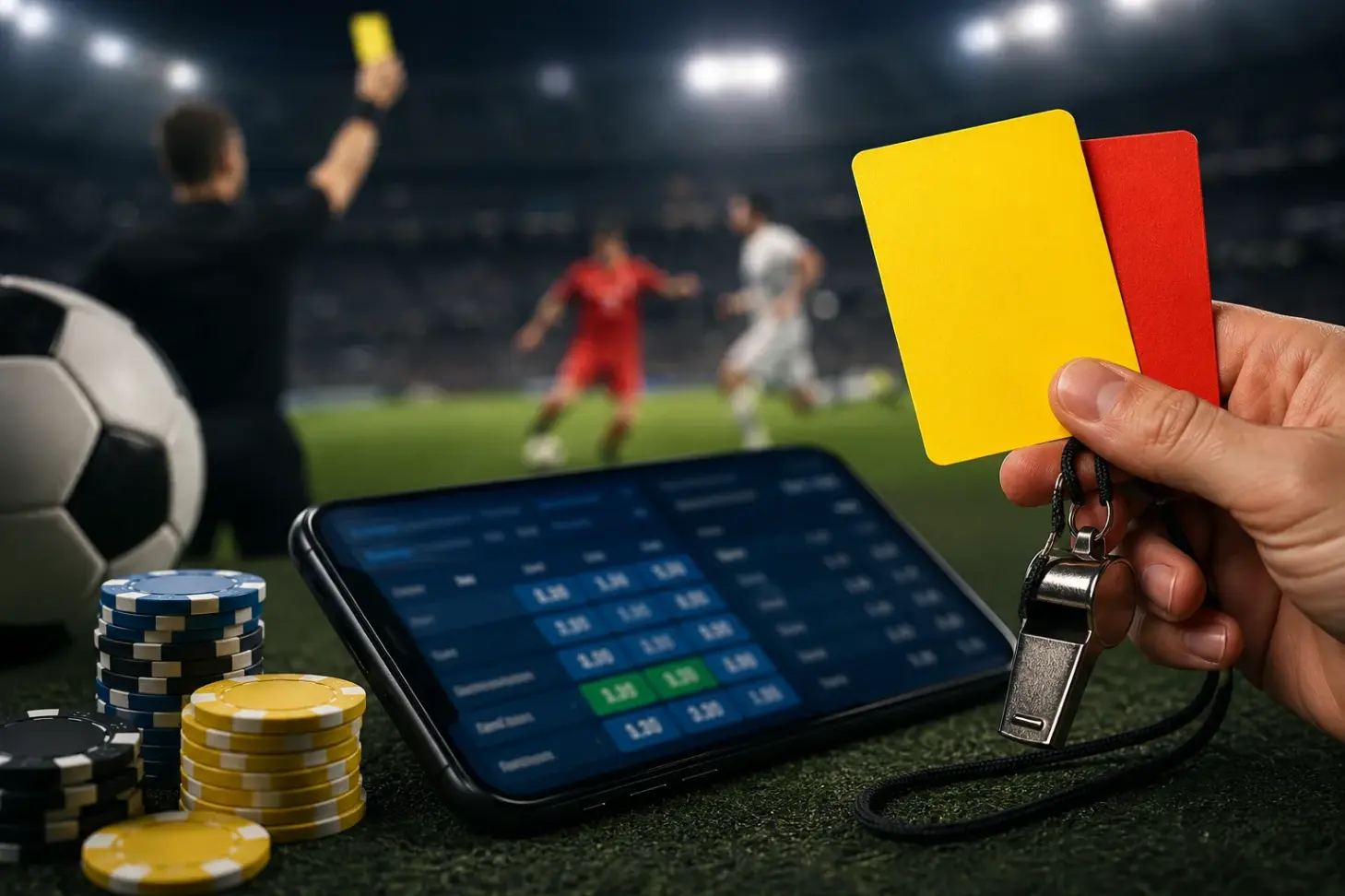
Football betting has changed dramatically over the last decade. Standard markets like match winners, totals, and both teams to score still attract most of the money, but experienced bettors increasingly focus on smaller statistical markets where bookmakers sometimes leave more room for value. One of the most underestimated directions is betting on cards and fouls. These markets are available on 1xBet almost every day across major leagues, international tournaments, and even lower divisions, yet many casual players ignore them completely.
That creates an unusual situation. Popular markets are heavily analyzed by algorithms, professional bettors, and massive betting volumes, while disciplinary markets often remain less efficient. A bettor who understands referee tendencies, tactical pressure, rivalry intensity, and game context can sometimes identify opportunities that are difficult to find in traditional odds.
Cards and fouls are also psychologically different from classic betting. Goals can depend on a single moment of brilliance or random deflection. Fouls and bookings usually emerge from tactical patterns, emotional tension, pressing intensity, and game management. That makes this segment attractive for players who prefer analytical betting over pure speculation.
Why card and foul markets attract experienced bettors
Most casual users open a betting app and immediately look for the main result markets. Bookmakers know this, which is why those lines are adjusted extremely quickly. Card and foul markets attract much smaller liquidity, especially before kickoff, and that can create soft lines.
Modern football produces a huge amount of statistical information. Teams that dominate possession often draw more fouls because opponents spend more time defending. Aggressive pressing systems naturally increase tactical fouls in midfield. Derby matches produce emotional pressure that raises the probability of bookings. Relegation battles often become physical and chaotic late in the season.
The interesting part is that these tendencies are not always reflected correctly in the odds.
Some bettors focus almost entirely on referee profiles. Certain referees allow physical contact and avoid early bookings. Others control matches aggressively from the opening minutes. In tournaments with strict officiating instructions, yellow card averages can rise sharply over a short period.
Several factors regularly influence card and foul totals:
• Team pressing intensity and defensive structure.
• Match importance and emotional tension.
• Referee personality and league officiating trends.
• Tactical mismatches between fast attackers and physical defenders.
• Weather conditions and field quality.
These elements often interact with each other. A high-pressure derby with a strict referee and poor weather conditions can produce extreme disciplinary numbers even if both teams normally play controlled football.
Another advantage of these markets is reduced public influence. Recreational bettors tend to back famous clubs, star players, and goals. That emotional money affects traditional odds more than disciplinary lines, which may stay closer to raw statistical models.
How referees shape betting opportunities
Referees are the central figure in card betting. Two matches between identical teams can produce completely different booking numbers depending on officiating style. This is why many sharp bettors build databases focused specifically on referees rather than teams.
Some officials prefer verbal warnings during the first half. Others use early yellow cards to establish authority immediately. Certain referees punish tactical fouls heavily, while others tolerate repeated physical contact before reaching for cards.
A strong betting approach involves understanding how referees behave under pressure. Statistics alone are not enough. Context matters enormously.
A referee averaging five yellow cards per game may suddenly produce much lower numbers in Champions League matches because elite players control emotions better. Another official may become stricter in derby environments due to crowd pressure and federation expectations.
The relationship between fouls and cards is not always linear either. Some referees whistle many fouls but issue few bookings. Others allow contact for long periods before escalating quickly with cards once the match becomes emotional.
Before placing bets, experienced players often evaluate several details simultaneously:
| Factor | Why It Matters | Betting Impact |
|---|---|---|
| Referee yellow card average | Indicates general strictness | Helps estimate total cards |
| Home crowd intensity | Can pressure officiating decisions | Increases risk of bookings |
| Rivalry history | Emotional matches escalate faster | Supports over card markets |
| Tactical fouls frequency | Pressing systems create interruptions | Boosts foul totals |
| Match importance | Stress affects player discipline | Raises volatility |
Looking at these factors together creates a more complete picture than relying only on raw averages.
A referee with moderate card statistics may suddenly become valuable for overs if the match involves two pressing teams competing for European qualification late in the season. Conversely, even a traditionally strict referee may produce lower numbers in a low-intensity fixture with little competitive significance.
Understanding referee psychology also helps in live betting. Some officials lose control gradually after repeated protests or dangerous tackles. Observing body language during the first 20 minutes can reveal whether the match is likely to escalate.
The difference between cards and fouls markets
Many bettors combine cards and fouls into one category, but they behave differently. Fouls are usually more stable statistically because they depend heavily on tactical structure. Cards are more volatile because referees interpret situations differently and emotions can change rapidly during matches.
Foul betting often rewards deep tactical analysis. Teams using aggressive counter-pressing systems commit many small fouls to stop transitions. Underdogs defending against possession-heavy favorites frequently accumulate fouls simply because they spend most of the match chasing the ball.
Cards introduce stronger emotional variables. A match can stay calm for an hour before a controversial decision completely changes the atmosphere. One confrontation between players can trigger multiple bookings within minutes.
This difference affects betting strategy.
Some experienced bettors prefer fouls because variance is lower. Others focus on cards because emotional swings create larger pricing mistakes in live markets.
There is also a major difference between league styles. English football traditionally allows more physical play than many continental leagues. South American competitions often produce extremely emotional disciplinary patterns. International tournaments sometimes become unpredictable because referees receive special instructions from governing bodies.
Certain leagues are particularly attractive for disciplinary betting because statistical tendencies remain consistent throughout the season. Others become dangerous because officiating standards vary dramatically week to week.
A useful approach is specialization. Instead of betting on cards across dozens of leagues, many successful players focus on one or two competitions where they understand referee culture, team behavior, and tactical trends deeply.
That level of familiarity matters far more in disciplinary betting than in mainstream result markets.
Live betting and momentum swings
Live betting is where card and foul markets become especially interesting. Pre-match statistics provide a foundation, but the real value often appears once the game starts.
The opening phase of a match reveals tactical aggression, referee tolerance, and emotional intensity much more clearly than historical data alone. A game expected to remain calm may suddenly become heated after an early foul, crowd reaction, or controversial decision.
Experienced live bettors watch for momentum shifts rather than isolated incidents.
Several signs can indicate increasing disciplinary risk during a match:
• Repeated protests toward the referee.
• Persistent tactical fouls in midfield.
• Aggressive pressing after conceding a goal.
• Emotional confrontations between defenders and attackers.
• Referee hesitation followed by sudden strictness.
These signals often appear before bookmakers fully adjust the live odds.
One important concept is referee escalation. Some officials tolerate physical contact initially but react aggressively once the match threatens to lose control. That creates strong opportunities for late card overs, especially after halftime.
Another factor is fatigue. Defensive players make more desperate challenges late in games, particularly when protecting narrow leads. Tactical fouls become more common during counterattacks in the final stages.
Live markets also allow bettors to avoid weak pre-match assumptions. Instead of predicting intensity blindly, players can confirm whether the tactical battle matches expectations before risking money.
This is especially useful in derby matches. Some derbies begin explosively from the first whistle, while others remain surprisingly controlled. Live observation helps separate genuine emotional escalation from exaggerated public narratives.
Another advantage of live betting is flexibility. Bettors can react to changes in game state. A red card completely transforms foul and booking dynamics. Teams trailing late often increase pressure and tactical fouling dramatically. Managers introducing fast wingers can force defenders into risky challenges.
These situational shifts create opportunities that static pre-match models cannot fully capture.
Common mistakes in disciplinary betting
Despite the potential value in these markets, many bettors approach them incorrectly. One of the biggest mistakes is relying purely on averages without considering context.
A team averaging three cards per game may suddenly produce a disciplined performance against a possession-heavy opponent because they spend more time defending in structure rather than pressing aggressively. Raw statistics alone rarely tell the whole story.
Another common error is overreacting to recent matches. Card markets are naturally volatile, and short-term trends can be misleading. A referee who issued eight yellow cards last weekend does not automatically become an “over referee” for the next match.
Public narratives also distort perception. Media discussions about “aggressive teams” or “hot-headed players” often influence recreational bettors more than actual tactical reality.
Some players make the mistake of ignoring game flow entirely. Betting overs blindly in famous rivalries can be dangerous if both teams prioritize caution due to league position or managerial pressure.
Bankroll management is another major issue. Because card markets can feel chaotic, emotional betting becomes common. Bettors chase losses after controversial refereeing decisions or late bookings that destroy under bets.
Successful bettors usually approach disciplinary betting with patience and structured risk control. They understand that even strong reads can fail due to random officiating moments.
The strongest long-term approaches typically include:
• Narrow league specialization instead of broad coverage.
• Detailed referee tracking over full seasons.
• Tactical analysis beyond surface statistics.
• Careful live observation before entering markets.
• Conservative bankroll management during volatile periods.
Discipline outside the match often matters more than predictions inside the match.
Another overlooked mistake is misunderstanding bookmaker adjustments. Once a league develops a strong reputation for cards, bookmakers adapt aggressively. Blindly betting overs in traditionally physical leagues no longer guarantees value because the market already expects those patterns.
Real value comes from identifying situations where context and psychology create hidden edges beyond standard statistical assumptions.
Why this market remains underestimated
The biggest reason disciplinary betting remains underestimated is simple: it lacks glamour. Most bettors prefer goals, star players, and dramatic scorelines. Fouls and cards feel secondary, even though they are deeply connected to how football actually unfolds tactically.
That creates inefficiencies which still exist despite modern data analysis.
Bookmakers dedicate enormous resources to major markets because betting volume is massive. Smaller markets naturally receive less attention. Algorithms remain powerful, but football emotions, referee psychology, and tactical dynamics are difficult to quantify perfectly.
Disciplinary betting also rewards patience more than excitement. It suits analytical bettors willing to study team styles, officiating patterns, and match context in detail. Casual players rarely spend time researching referee tendencies before placing bets.
This hidden nature is exactly what attracts experienced bettors to the market.
Football itself continues evolving in ways that strengthen these opportunities. High pressing systems create more tactical fouls. Increased VAR pressure influences referee behavior. Modern players challenge decisions aggressively, raising emotional intensity in major matches.
At the same time, bookmakers constantly expand their betting menus. 1xBet now offers combinations involving total cards, individual team bookings, player fouls, and live disciplinary props across many competitions. The variety allows bettors to target highly specific situations instead of relying only on basic totals.
The market still carries unpredictability, and no betting strategy eliminates risk. Refereeing decisions remain subjective, emotions shift suddenly, and football always contains randomness. Yet disciplined analysis can reduce uncertainty enough to create long-term opportunities.
For bettors tired of overcrowded mainstream markets, cards and fouls offer a different kind of challenge. Success depends less on hype and more on understanding the hidden structure of football matches — the tactical pressure, emotional tension, and psychological battles that shape every game beneath the final score.
Conclusion
Betting on cards and fouls remains one of football’s most overlooked analytical markets. While most players focus on goals and winners, disciplinary betting rewards those who understand referee tendencies, tactical pressure, emotional intensity, and live match dynamics.
The appeal of these markets comes from their complexity. Cards and fouls are influenced by far more than raw statistics. Team styles, rivalry history, game importance, and referee psychology all interact in ways that create opportunities many casual bettors never notice.
1xBet continues expanding this segment with deeper betting options and broader live coverage, making the market more accessible than ever. For disciplined bettors willing to study football beyond the scoreboard, disciplinary markets can become a valuable alternative to traditional betting approaches.